- Your cart is empty
- Continue Shopping

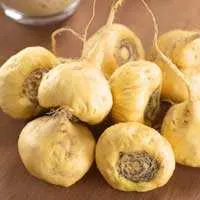
Maca, known botanically as Lepidium meyenii, is a cruciferous vegetable native to the high Andes mountains of Peru, where it has been cultivated for over two thousand years at elevations exceeding 13,000 feet. The plant produces a radish-like root that varies in color from white and yellow to red, purple, and black. These color variations, which result from different phytochemical profiles, have traditionally been associated with distinct therapeutic properties in Andean folk medicine.
The bioactive constituents of maca include a unique class of compounds called macamides and macaenes, which are believed to be responsible for many of the root’s physiological effects. Maca also contains substantial amounts of glucosinolates, the same sulfur-containing compounds found in broccoli and other cruciferous vegetables that support detoxification pathways. Additionally, maca provides a rich nutritional profile including essential amino acids, vitamins, minerals, and fiber.
Traditional Peruvian cultures used maca as a staple food and medicinal crop. Incan warriors reportedly consumed maca before battle to enhance strength and endurance, while the root was also valued for supporting fertility, libido, and general vitality. The harsh growing conditions of the Andean highlands with intense ultraviolet radiation, freezing temperatures, and poor soil are thought to contribute to maca’s dense concentration of protective and adaptive compounds.
Modern maca supplements typically use dried and powdered root or concentrated extracts. The three main color varieties are often sold separately, each with distinct traditional associations:
| Color | Traditional Association |
|---|---|
| Black | Male vitality and muscle support |
| Red | Prostate and bone health |
| Yellow | General tonic and everyday use |
Scientific validation of these color-specific effects remains limited. Discover more botanicals for vitality and hormonal balance in our Ingredient Glossary.
Maca root has gained significant popularity in men’s health supplements for its potential role in supporting libido, sexual function, and overall vitality. Unlike many botanicals that influence male health through direct hormonal mechanisms, maca appears to work primarily through non-hormonal pathways, making it unique among ingredients targeting this category.
Libido Enhancement Research published in Andrologia demonstrated that maca supplementation improved sexual desire in healthy men after eight weeks of use. Notably, the study found that these effects occurred without changes in serum testosterone levels, suggesting that maca influences libido through mechanisms other than direct hormonal stimulation. The proposed pathways include effects on neurotransmitter systems particularly dopamine and serotonin which are central to sexual motivation and reward.
Erectile Function For erectile function, clinical studies have shown that maca may support subjective measures of sexual performance. A study in the Journal of Ethnopharmacology found that men taking maca extract reported improvements in various parameters of sexual well-being compared to placebo. The mechanisms may involve enhanced nitric oxide production and improved pelvic blood flow, though research in this area continues to evolve.
Energy and Stamina Maca’s effects on energy and stamina extend beyond sexual applications. The root has been studied for its potential to reduce fatigue and enhance physical performance. Research suggests that maca may support mitochondrial function and improve glucose tolerance, providing sustained energy without the stimulant effects of caffeine or other energizing compounds. This makes maca particularly suitable for individuals seeking vitality support without jitteriness or sleep disruption.
Maca’s adaptogenic properties support energy production and stress resilience through multiple pathways. The root appears to influence the hypothalamic-pituitary-adrenal axis, helping to maintain healthy cortisol patterns during periods of physical or psychological demand. By supporting balanced stress hormone responses, maca may prevent the energy crashes and fatigue associated with chronic stress exposure.
Menopausal Symptom Relief: For women’s hormonal health, maca has been traditionally used to support menstrual regularity, menopausal comfort, and fertility. A study published in the International Journal of Biomedical Science found that maca supplementation reduced menopausal symptoms including hot flashes, night sweats, and mood disturbances in postmenopausal women. Importantly, these effects occurred without altering serum estrogen or progesterone levels, suggesting that maca works through hypothalamic and neurotransmitter modulation rather than direct hormone replacement.
Fertility Support: Maca’s potential fertility benefits have been investigated in both men and women. Animal studies and preliminary human research suggest that maca may support sperm quality parameters and ovarian function, though more rigorous clinical trials are needed to confirm these effects. The traditional use of maca as a fertility enhancer in Andean cultures aligns with these modern research directions.
Cognitive Function: Preliminary research suggests that black maca in particular may support memory and learning. The mechanisms likely involve antioxidant protection of neural tissue and modulation of neurotransmitter systems.
Bone and Mineral Density: Maca contains significant amounts of calcium and other minerals essential for skeletal health. Research in postmenopausal women has indicated that maca may support bone density markers, possibly through its nutritional content and non-hormonal influences on bone metabolism.
Mood and Emotional Well-Being: Maca’s influence on serotonin and dopamine systems may support emotional balance. Some studies indicate reductions in anxiety and depression scores with maca supplementation, particularly in menopausal women.
| Form | Typical Daily Dose | Notes |
|---|---|---|
| Dried root powder | 1,500–3,000 mg | Retains more enzymes and nutrients; may be harder to digest |
| Concentrated extract | 300–600 mg | Higher potency per serving |
| Gelatinized powder | 1,500–3,000 mg | Starch removed for improved digestibility; often preferred |
Maca is frequently combined with other vitality-supporting ingredients such as Tongkat Ali, Ashwagandha, and Fenugreek Extract addressing multiple aspects of hormonal and energetic health. Maca also appears in women’s health formulations alongside Dong Quai and Black Cohosh for comprehensive menopausal support.
Maca is generally recognized as safe with a long history of use as a food. Mild side effects may include digestive upset, particularly with raw maca at higher doses. Because of its potential effects on hormone-sensitive tissues, individuals with hormone-sensitive conditions should consult healthcare providers before use although maca’s non-hormonal mechanism suggests a generally favorable safety profile.
Thyroid Note: Maca contains goitrogenic compounds that may affect thyroid function in individuals with iodine deficiency or existing thyroid conditions. Those with thyroid concerns should use maca under medical supervision and ensure adequate iodine intake.
Pregnancy: Pregnant and breastfeeding women should consult healthcare providers due to limited safety data.
Individuals exploring maca root may also consider the following:
| Ingredient | Mechanism |
|---|---|
| Tongkat Ali | Supports testosterone production through hypothalamic-pituitary-gonadal axis modulation; offers direct hormonal support complementing maca’s non-hormonal approach |
| Ashwagandha | Adaptogenic stress management and cortisol reduction, protecting vitality from stress-mediated suppression |
| Horny Goat Weed | Vascular support through PDE5 inhibition and nitric oxide enhancement; addresses erectile function through distinct mechanisms |
| Ginseng Extract | Traditional adaptogenic vitality that pairs well with maca’s endurance-enhancing properties |
Gonzales, G. F., Córdova, A., Vega, K., Chung, A., Villena, A., Góñez, C., & Castillo, S. (2002). Effect of Lepidium meyenii (Maca) on sexual desire and its absent relationship with serum testosterone levels in adult healthy men. Andrologia, 34(5), 367–372. https://doi.org/10.1046/j.1439-0272.2002.00519.x
Zenico, T., Cicero, A. F. G., Valmorri, L., Mercuriali, M., & Bercovich, E. (2009). Subjective effects of Lepidium meyenii (Maca) extract on well-being and sexual performances in patients with mild erectile dysfunction: a randomised, double-blind clinical trial. Andrologia, 41(2), 95–99. https://doi.org/10.1111/j.1439-0272.2008.00892.x
Brooks, N. A., Wilcox, G., Walker, K. Z., Ashton, J. F., Cox, M. B., & Stojanovska, L. (2008). Beneficial effects of Lepidium meyenii (Maca) on psychological symptoms and measures of sexual dysfunction in postmenopausal women are not related to estrogen or androgen content. Menopause, 15(6), 1157–1162. https://doi.org/10.1097/gme.0b013e3181732953
Meissner, H. O., Reich-Bilinska, H., Mscisz, A., & Kedzia, B. (2006). Therapeutic effects of pre-gelatinized maca (Lepidium Peruvianum Chacon) used as a non-hormonal alternative to HRT in perimenopausal women: clinical pilot study. International Journal of Biomedical Science, 2(2), 143–159.
Gonzales, G. F., Miranda, S., Nieto, J., Fernández, G., Yucra, S., Rubio, J., … & Gasco, M. (2005). Red maca (Lepidium meyenii) reduced prostate size in rats. Reproductive Biology and Endocrinology, 3(1), 5. https://doi.org/10.1186/1477-7827-3-5
Stone, M., Ibarra, A., Roller, M., Zangara, A., & Stevenson, E. (2009). A pilot investigation into the effect of maca supplementation on physical activity and sexual desire in sportsmen. Journal of Ethnopharmacology, 126(3), 574–576. https://doi.org/10.1016/j.jep.2009.04.045