- Your cart is empty
- Continue Shopping

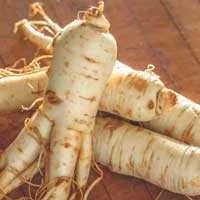
Ginseng refers to several species of slow-growing perennial plants in the genus Panax, with Panax ginseng (Asian or Korean ginseng) and Panax quinquefolius (American ginseng) being the most commonly used in supplements. The name “Panax” derives from the Greek word meaning “all-healing,” reflecting the broad traditional applications of this botanical. The genus name should not be confused with other plants called ginseng, such as Siberian ginseng (Eleutherococcus senticosus), which belongs to a different botanical family and has distinct chemical constituents.
The bioactive compounds responsible for ginseng’s effects are a group of steroidal saponins called ginsenosides, with over 100 different ginsenosides identified across various ginseng species and preparations. These ginsenosides are classified into several groups based on their chemical structure, with the protopanaxadiol and protopanaxatriol groups being the most extensively studied. The specific profile of ginsenosides varies depending on the species, growing conditions, age of the root, and processing method, which explains the differing traditional uses of Asian and American ginseng.
Asian ginseng has been used in traditional Chinese medicine for over two thousand years as a qi tonic, believed to replenish vital energy, support longevity, and enhance resilience. The root was traditionally harvested from wild plants after many years of growth, though most modern ginseng is cultivated. American ginseng was used by Native American tribes for similar purposes and was later exported to China, where it became highly valued. The processing of ginseng root into white ginseng (simply dried) or red ginseng (steamed before drying) also alters the ginsenoside profile and traditional applications.
Discover all adaptogens and natural performance enhancers in our Ingredient Glossary.
Ginseng extract’s most widely recognized traditional application involves its potential to combat fatigue and support physical and mental energy. Modern research has investigated these effects with increasing sophistication, revealing multiple mechanisms that contribute to ginseng’s energizing properties.
Research published in the Journal of the American College of Nutrition demonstrated that ginseng supplementation improved physical endurance and reduced fatigue in healthy adults. The mechanisms appear to involve modulation of the hypothalamic-pituitary-adrenal (HPA) axis, which regulates stress responses and energy metabolism. Ginseng appears to help maintain healthy cortisol patterns during periods of physical or psychological demand, preventing the energy-depleting effects of chronic stress exposure.
Ginseng also appears to influence mitochondrial function, the cellular powerhouses responsible for ATP production. Some ginsenosides have been shown to support mitochondrial biogenesis and improve the efficiency of oxidative phosphorylation. By enhancing the body’s capacity for energy production at the cellular level, ginseng may provide sustained vitality rather than the temporary stimulation associated with caffeine or other stimulants.
For mental energy, ginseng has been shown to improve subjective feelings of alertness and reduce mental fatigue during cognitively demanding tasks. These effects may involve improved glucose utilization in the brain, enhanced neurotransmitter function, and protection of neural tissues from stress-induced damage.
Ginseng’s effects on cognitive function have been investigated in both healthy individuals and those with age-related cognitive concerns. Research suggests that ginseng may improve memory, attention, and information processing speed through multiple mechanisms.
Studies indicate that ginsenosides may support acetylcholine levels in the brain, enhancing the neurotransmitter system central to learning and memory. Ginseng also appears to support neuroplasticity, the brain’s ability to form new connections and adapt to changing demands. Additionally, the antioxidant properties of ginsenosides protect neural tissues from oxidative stress, which is implicated in age-related cognitive decline.
For male vitality, ginseng has been traditionally used as a reproductive tonic and has been studied for its potential effects on testosterone levels, libido, and sexual function. Research published in the Journal of Urology found that ginseng improved erectile function parameters in men with concerns. The mechanisms may involve enhanced nitric oxide synthesis, improved penile blood flow, and support for the hormonal cascade involved in sexual function.
Ginseng also appears to influence sperm quality parameters, with some studies indicating improvements in count, motility, and morphology. These effects may stem from the compound’s antioxidant protection of testicular tissue and its support for mitochondrial function in sperm cells.
Immune System Support Ginseng appears to modulate immune function, enhancing natural killer cell activity and supporting balanced cytokine production. Research suggests it may reduce the incidence and severity of respiratory infections.
Blood Sugar and Metabolic Health Some ginsenosides appear to support healthy insulin sensitivity and glucose uptake by cells, making ginseng relevant for metabolic wellness formulations.
Stress Relief and Mood Balance Ginseng’s adaptogenic properties help maintain emotional equilibrium during periods of stress. Research indicates improvements in mood parameters and stress resilience with supplementation.
Ginseng supplements typically provide 200 to 400 milligrams of standardized extract daily, with ginsenoside content standardized to 4 to 7 percent. Some high-quality products specify the content of individual ginsenosides such as Rg1, Rb1, and Rg3. The form of ginseng (white, red, or extract) influences the ginsenoside profile and should be selected based on the intended application.
Ginseng is frequently combined with other energy-supporting ingredients such as Ashwagandha, Maca Root, and Coenzyme Q10 (CoQ10). For cognitive support, it is often paired with Bacopa Monnieri and Ginkgo Biloba. In male vitality formulations, ginseng appears alongside Tongkat Ali and Fenugreek Extract.
Ginseng is generally well-tolerated, though it can cause insomnia, restlessness, and increased heart rate in sensitive individuals, particularly when taken late in the day. The herb may interact with blood-thinning medications, diabetes medications, and stimulants. Individuals with autoimmune conditions should use ginseng cautiously due to its immunomodulatory effects.
Ginseng may have estrogenic activity in some preparations, and men with hormone-sensitive conditions should consult healthcare providers. The herb should be used cyclically, with breaks after several weeks of use, to maintain responsiveness. Pregnant and breastfeeding women should avoid ginseng.
Individuals exploring ginseng extract may also consider Ashwagandha, Maca Root, and Coenzyme Q10 (CoQ10).