- Your cart is empty
- Continue Shopping

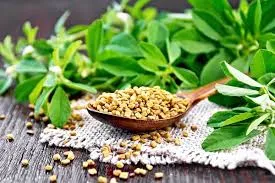
Fenugreek, known botanically as Trigonella foenum-graecum, is an annual herb native to the Mediterranean region, western Asia, and southern Europe. The plant produces small golden-brown seeds that have been used for thousands of years as both a culinary spice and a medicinal agent. In ancient Egypt, fenugreek was employed for embalming and as an incense, while traditional medicine systems across the Middle East, India, and China have utilized the seeds for digestive, metabolic, and reproductive health applications.
The bioactive constituents of fenugreek seeds include a diverse array of compounds. The most significant for male health applications are steroidal saponins, particularly furostanolic saponins such as protodioscin. These saponins are structurally related to human steroid hormones and are believed to underlie many of fenugreek’s effects on hormonal balance. The seeds also contain:
Standardized fenugreek extracts for supplement use typically concentrate the saponin content, often standardizing to 50% or higher furostanolic saponins. Some proprietary extracts, such as Testofen, are specifically developed and studied for their effects on male hormonal parameters. The extraction process aims to preserve the full spectrum of bioactive compounds while removing the characteristic bitter taste that makes raw fenugreek seeds unpalatable in large quantities.
Fenugreek extract has gained substantial attention in sports nutrition and men’s health for its potential role in supporting testosterone levels, libido, and physical performance. Clinical research has investigated these applications with increasingly rigorous methodology, producing evidence that supports traditional uses while clarifying the mechanisms involved.
A randomized controlled trial published in the International Journal of Exercise Science demonstrated that supplementation with a standardized fenugreek extract was associated with significant increases in total and bioavailable testosterone levels in resistance-trained men. The proposed mechanisms involve several pathways:
Research has also examined fenugreek’s effects on libido and sexual function. A study in Phytotherapy Research found that men taking fenugreek extract reported improvements in various aspects of sexual health, including arousal and satisfaction. These effects may stem from the compound’s influence on testosterone levels combined with potential direct effects on neurotransmitter systems involved in sexual motivation.
For athletic performance, fenugreek has been investigated for its potential to enhance strength, body composition, and recovery. Some studies indicate that fenugreek supplementation may support lean muscle mass gains when combined with resistance training, possibly mediated through its effects on anabolic hormones and insulin sensitivity. The galactomannan fiber content may also contribute to appetite regulation and metabolic health, supporting body composition goals.
Beyond direct testosterone support, fenugreek extract appears to influence broader aspects of men’s hormonal balance. The herb’s effects on insulin sensitivity are particularly relevant, as insulin resistance is associated with reduced testosterone production and increased sex hormone-binding globulin (SHBG), which binds testosterone and renders it biologically inactive.
Research suggests that fenugreek’s soluble fiber content slows carbohydrate absorption and improves postprandial glucose responses, supporting healthy insulin function. This metabolic benefit complements the direct hormonal effects to create a comprehensive approach to men’s endocrine health.
Fenugreek may also support healthy prolactin levels which is another hormone that influences male reproductive function when elevated. By modulating the hypothalamic-pituitary-gonadal axis at multiple points, fenugreek offers a nuanced approach to hormonal optimization rather than a single-target intervention.
While male vitality and hormonal health represent fenugreek’s primary researched applications, the herb offers benefits in other areas:
The galactomannan fiber in fenugreek seeds slows gastric emptying and reduces glucose absorption, supporting healthy postprandial blood sugar levels. Clinical trials have demonstrated improvements in fasting glucose and insulin sensitivity with fenugreek supplementation.
Traditional use of fenugreek for digestive complaints finds support in its demulcent properties, which soothe irritated gastrointestinal mucosa. The fiber content also supports regular bowel function and healthy gut microbiome composition.
In traditional medicine and some modern applications, fenugreek has been used to support milk production in breastfeeding women, though this application requires medical guidance and is distinct from the male health focus of most supplement formulations.
Fenugreek supplements for male health typically provide 500 to 600 milligrams of standardized extract daily, with saponin content standardized to 50% or higher. Some formulations use proprietary extracts that have been specifically studied in clinical trials, such as Testofen or Furosap.
The herb is frequently combined with other male vitality ingredients such as Tongkat Ali, Ashwagandha, and Zinc. These combinations address multiple aspects of hormonal health from testosterone production to stress management to mineral cofactor support. Fenugreek is also found in some weight management formulations where its fiber content and metabolic effects may support body composition goals.
Find additional ingredients for hormonal balance, physical performance and other health support in our Ingredient Glossary.
Fenugreek is generally well-tolerated. The most common side effects, particularly at higher doses, include mild gastrointestinal symptoms such as diarrhea and flatulence. The compound sotolon may also produce a maple syrup-like odor noticeable in sweat and urine.
Important: Because of its effects on blood sugar, individuals taking diabetes medications should monitor glucose levels when using fenugreek supplements. The herb may also interact with anticoagulant medications due to its coumarin content. Men with hormone-sensitive conditions should consult healthcare providers before use. Pregnant women should avoid fenugreek due to its traditional use as a uterine stimulant.
Individuals exploring fenugreek extract may also consider the following complementary ingredients:
| Ingredient | Primary Mechanism |
|---|---|
| Tongkat Ali | Influences the hypothalamic-pituitary-gonadal axis and reduces cortisol, complementing fenugreek’s enzyme inhibition |
| Ashwagandha | Adaptogenic stress management that protects testosterone production from cortisol-mediated suppression |
| Tribulus Terrestris | Long history of traditional use for male vitality, though direct hormonal evidence is less consistent than for fenugreek |
| Saw Palmetto | Well-researched benefits for prostate health, complementing fenugreek’s vitality-focused effects |
Wilborn, C., Taylor, L., Poole, C., Foster, C., Willoughby, D., & Kreider, R. (2010). Effects of a purported aromatase and 5-alpha-reductase inhibitor on hormone profiles in college-age men. International Journal of Sport Nutrition and Exercise Metabolism, 20(6), 457–465. https://doi.org/10.1123/ijsnem.20.6.457
Steels, E., Rao, A., & Vitetta, L. (2011). Physiological aspects of male libido enhanced by standardized Trigonella foenum-graecum extract and mineral formulation. Phytotherapy Research, 25(9), 1294–1300. https://doi.org/10.1002/ptr.3360
Poole, C., Bushey, B., Foster, C., Campbell, B., Willoughby, D., Kreider, R., … & Wilborn, C. (2010). The effects of a commercially available botanical supplement on strength, body composition, power output, and hormonal profiles in resistance-trained males. Journal of the International Society of Sports Nutrition, 7(1), 34. https://doi.org/10.1186/1550-2783-7-34
Sharma, R. D., Raghuram, T. C., & Rao, N. S. (1990). Effect of fenugreek seeds on blood glucose and serum lipids in type I diabetes. European Journal of Clinical Nutrition, 44(4), 301–306. https://pubmed.ncbi.nlm.nih.gov/2194788/
Basch, E., Ulbricht, C., Kuo, G., Szapary, P., & Smith, M. (2003). Therapeutic applications of fenugreek. Alternative Medicine Review, 8(1), 20–27.https://pubmed.ncbi.nlm.nih.gov/12611558/
Zameer, S., Najmi, A. K., Vohora, D., & Akhtar, M. (2018). Ameliorative effect of Trigonella foenum-graecum L. on high-fat diet-induced fatty liver in rats. Journal of Ayurveda and Integrative Medicine, 9(2), 116–122. https://doi.org/10.1016/j.jaim.2017.05.006