- Your cart is empty
- Continue Shopping

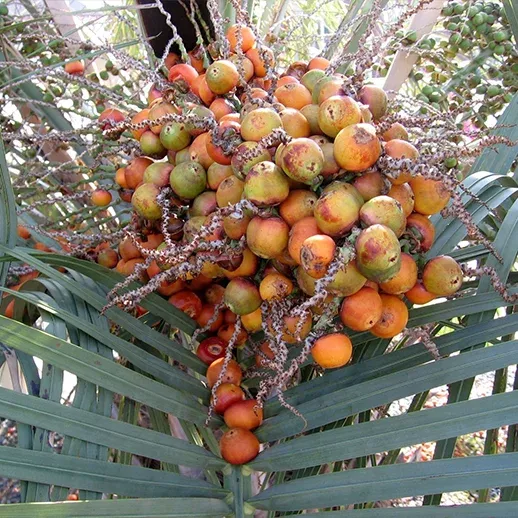
Saw palmetto, scientifically named Serenoa repens, is a small palm native to the southeastern United States, particularly Florida and the Gulf Coast region. The plant produces dark purple berries approximately the size of olives, which have been used for centuries by Native American tribes for food and traditional medicine. The name “saw palmetto” refers to the sharp, saw-like teeth along the edges of the palm’s fan-shaped leaves.
The active constituents of saw palmetto berries include a complex mixture of fatty acids, plant sterols, flavonoids, and polysaccharides. The primary bioactive fraction consists of free fatty acids and their glycerides, including lauric acid, oleic acid, myristic acid, and linoleic acid, along with beta-sitosterol and other phytosterols. Standardized extracts typically quantify total fatty acid content, with high-quality products containing 85 to 95 percent fatty acids.
Saw palmetto berries were introduced into Western medical practice in the late 1800s and gained popularity in Europe before becoming widely used in North American nutritional supplements. Today, saw palmetto ranks among the most commonly consumed herbal supplements by men, particularly those over the age of fifty.
Saw palmetto’s most established and researched application centers on supporting prostate health and normal urinary function in men. The prostate gland, which surrounds the urethra below the bladder, tends to enlarge with age in many men, a condition known as benign prostatic hyperplasia (BPH). This enlargement can compress the urethra and irritate the bladder, leading to urinary frequency, urgency, weak stream, and nocturia.
Research suggests saw palmetto may support prostate health through several mechanisms. The herb appears to inhibit the enzyme 5-alpha reductase, which converts testosterone to dihydrotestosterone (DHT). DHT is a more potent androgen that plays a significant role in prostate tissue growth. By modulating this conversion, saw palmetto may help maintain healthy prostate size and function.
A comprehensive meta-analysis published in the Journal of the American Medical Association reviewed multiple clinical trials and found that saw palmetto extract was associated with improvements in urinary symptom scores and peak urine flow rates compared to placebo. Men taking saw palmetto reported reduced nighttime urination, improved bladder emptying, and decreased urinary urgency. These benefits typically manifest after several weeks to months of consistent use.
Saw palmetto also exhibits anti-inflammatory properties that may contribute to its prostate-supporting effects. Chronic low-grade inflammation is increasingly recognized as a factor in prostate tissue changes, and the fatty acid components of saw palmetto appear to modulate inflammatory pathways in prostatic tissue.
Beyond prostate health, saw palmetto has gained attention for its potential role in supporting male hormonal balance and hair retention. The same 5-alpha reductase inhibition that underlies its prostate benefits may also influence hair follicle health, as DHT is implicated in androgenetic alopecia, the most common form of hair loss in men.
Research on saw palmetto for hair growth has shown promising though preliminary results. A study published in the Journal of Alternative and Complementary Medicine found that men using saw palmetto extract experienced increased hair count compared to placebo after several months of treatment. The proposed mechanism involves reducing DHT’s effects on susceptible hair follicles, thereby supporting the hair growth cycle and reducing follicle miniaturization.
For male vitality, saw palmetto’s influence on androgen metabolism may support healthy testosterone levels by preventing its excessive conversion to DHT. This hormonal modulation may benefit men concerned with maintaining vitality while addressing prostate and hair concerns simultaneously.
While prostate, urinary, and hair health represent saw palmetto’s primary applications, research has explored other potential benefits:
Anti-Inflammatory Support: The fatty acid and phytosterol components of saw palmetto demonstrate broad anti-inflammatory properties that may support general wellness beyond the prostate.
Urinary Tract Health: By supporting normal bladder function and reducing urinary irritation, saw palmetto may complement other ingredients used for urinary tract comfort.
Hormonal Balance in Women: Though less commonly discussed, some practitioners use saw palmetto for women with certain hormonal concerns, including polycystic ovary syndrome, due to its anti-androgenic properties. Research in this area remains limited.
Saw palmetto supplements typically provide 160 to 320 milligrams of standardized berry extract daily, often divided into two doses. The extract is commonly produced using supercritical carbon dioxide extraction or ethanol extraction, with CO2 extracts generally considered to preserve the full spectrum of fatty acids more effectively.
Quality varies considerably across products, as saw palmetto is one of the most frequently adulterated herbal supplements. Consumers should select products from reputable manufacturers that provide third-party testing and verification of fatty acid content. The USP (United States Pharmacopeia) verification mark indicates that a product meets stringent quality standards.
Saw palmetto is generally well-tolerated, with mild gastrointestinal symptoms being the most common side effect. Because of its hormonal effects, men should inform their healthcare providers about saw palmetto use before prostate-specific antigen (PSA) testing, as the herb may theoretically influence PSA levels, though evidence for this effect remains inconsistent.
Saw palmetto may interact with anticoagulant and antiplatelet medications due to its mild blood-thinning properties. Men taking hormone-related medications should consult healthcare providers before use. The herb is not recommended for pregnant or breastfeeding women.
Individuals exploring saw palmetto may also consider Pygeum Africanum, Beta-Sitosterol, and Stinging Nettle.
Find more ingredients for urinary comfort and men’s wellness in the Ingredient Glossary.
Wilt, T. J., Ishani, A., Stark, G., MacDonald, R., Lau, J., & Mulrow, C. (1998). Saw palmetto extracts for treatment of benign prostatic hyperplasia: a systematic review. JAMA, 280(18), 1604–1609. https://doi.org/10.1001/jama.280.18.1604
Tacklind, J., MacDonald, R., Rutks, I., & Wilt, T. J. (2012). Serenoa repens for benign prostatic hyperplasia. Cochrane Database of Systematic Reviews, (12), CD001423. https://doi.org/10.1002/14651858.CD001423.pub3
Prager, N., Bickett, K., French, N., & Marcovici, G. (2002). A randomized, double-blind, placebo-controlled trial to determine the effectiveness of botanically derived inhibitors of 5-alpha-reductase in the treatment of androgenetic alopecia. Journal of Alternative and Complementary Medicine, 8(2), 143–152. https://doi.org/10.1089/107555302317371433
Gerber, G. S., Kuznetsov, D., Johnson, B. C., & Burstein, J. D. (2001). Randomized, double-blind, placebo-controlled trial of saw palmetto in men with lower urinary tract symptoms. Urology, 58(6), 960–964. https://doi.org/10.1016/S0090-4295(01)01405-1
Bent, S., Kane, C., Shinohara, K., Neuhaus, J., Hudes, E. S., Goldberg, H., & Avins, A. L. (2006). Saw palmetto for benign prostatic hyperplasia. New England Journal of Medicine, 354(6), 557–566. https://doi.org/10.1056/NEJMoa053085
Marks, L. S., Partin, A. W., Epstein, J. I., Tyler, V. E., Simon, I., Macairan, M. L., … & deKernion, J. B. (2000). Effects of a saw palmetto herbal blend in men with symptomatic benign prostatic hyperplasia. The Journal of Urology, 163(5), 1451–1456. https://doi.org/10.1016/S0022-5347(05)67527-6