- Your cart is empty
- Continue Shopping

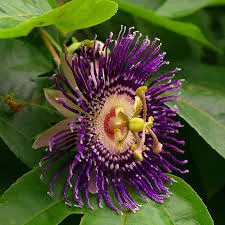
Passionflower, known botanically as Passiflora incarnata, is a fast-growing perennial vine native to the southeastern United States, Central America, and South America. The plant produces intricate, exotic flowers that have captivated botanists and herbalists for centuries. Spanish explorers in the 16th century named the plant for its perceived resemblance to elements of the Passion of Christ. The aerial parts of the plant, including leaves, stems, and flowers, have been used in traditional medicine for their calming and sleep-promoting properties.
The bioactive constituents of passionflower include a complex mixture of flavonoids, alkaloids, and glycosides. The primary active compounds believed to underlie its calming effects include:
| Compound | Properties |
|---|---|
| Chrysin | Binds to benzodiazepine receptors on GABA-A complexes; milder effect than pharmaceutical benzodiazepines |
| Apigenin | Also found in chamomile; contributes to anxiolytic and sedative properties |
| Vitexin | Flavonoid contributing to overall calming activity |
| Harmane alkaloids | Support the herb’s broader neurological effects |
Traditional uses of passionflower by Native American tribes included applications for anxiety, insomnia, seizures, and pain. European settlers adopted these uses, and passionflower became a popular ingredient in 19th-century American eclectic medicine. The herb was listed in the United States National Formulary until 1936, when it was removed due to lack of standardized evidence although modern research has since validated many of its traditional applications.
Discover the complete collection of calming botanicals in our Ingredient Glossary.
Passionflower extract has been extensively studied for its potential to support sleep onset, sleep quality, and nighttime calm. The herb’s mechanisms center on modulation of the GABA system- the primary inhibitory neurotransmitter network that regulates sleep, anxiety, and muscle relaxation.
Research published in the Journal of Ethnopharmacology demonstrated that passionflower extract increased total sleep time in animal models and reduced the time required to fall asleep. The flavonoid compounds chrysin and apigenin bind to GABA-A receptors and enhance the effects of endogenous GABA. This allosteric modulation produces calming effects without the potent sedation or dependency risks associated with direct GABA-A agonists.
A clinical study published in Phytotherapy Research found that adults drinking passionflower tea reported significantly better sleep quality compared to those drinking a placebo tea. Effects were noticeable after one week of nightly consumption, with participants reporting:
Passionflower’s sleep-promoting effects are qualitatively different from those of melatonin. While melatonin primarily signals circadian timing, passionflower works directly on the neurochemical processes of relaxation and sleep induction. This makes passionflower particularly suitable for individuals whose sleep difficulties stem from mental tension, worry, or physical restlessness rather than circadian disruption.
The herb also appears to influence sleep architecture, supporting the progression through normal sleep stages. Some research suggests that passionflower may increase slow-wave sleep- the deep restorative phase essential for physical recovery and memory consolidation. This effect on sleep quality distinguishes passionflower from simple sedatives that may suppress normal sleep cycling.
Passionflower’s anxiolytic properties have been investigated in both preclinical and clinical settings. The herb appears to reduce subjective feelings of anxiety without producing the cognitive impairment or motor dysfunction associated with pharmaceutical anxiolytics making it suitable for daytime use when mental clarity must be preserved.
Clinical Anxiety Relief: Research published in the Journal of Clinical Pharmacy and Therapeutics found that passionflower extract was as effective as a conventional anxiolytic medication in reducing preoperative anxiety, with fewer side effects. Participants taking passionflower reported feeling calmer without experiencing the sedation or disorientation that can accompany pharmaceutical approaches.
Nerve Comfort and Neural Calming: For nerve comfort, passionflower’s GABAergic and antispasmodic properties may help reduce muscular tension and neural hypersensitivity associated with stress and anxiety. The herb appears to modulate the activity of voltage-gated calcium channels in neurons, reducing excessive excitability while maintaining normal neural function. This calcium channel modulation complements the GABAergic effects to provide comprehensive neural calming.
Mood Stability: Passionflower has also been studied for its potential role in supporting mood stability. By enhancing GABAergic tone and modulating serotonin systems, the herb may help maintain emotional equilibrium during periods of psychological stress. Some practitioners use passionflower in combination with other calming botanicals for comprehensive emotional support.
Cognitive Function: By supporting restful sleep and reducing anxiety, passionflower indirectly supports cognitive performance. Some research also suggests direct neuroprotective effects through antioxidant mechanisms.
Pain Management: Traditional use of passionflower for pain finds support in research indicating that the herb may modulate pain perception through GABAergic and opioid pathways, though clinical applications in this area require further investigation.
Digestive Health: Passionflower’s antispasmodic effects on smooth muscle may support digestive comfort by reducing intestinal cramping and promoting normal gastrointestinal motility.
| Form | Typical Daily Dose | Notes |
|---|---|---|
| Standardized extract (capsule/tablet) | 300–600 mg | Typically standardized to 3.5–4% isovitexin or equivalent flavonoids |
| Concentrated extract | Lower dose | Maintains therapeutic compound levels at reduced serving size |
| Liquid extract | Varies | Flexible dosing; rapid absorption |
| Tea | Varies | Traditional experience; aromatic compounds may enhance relaxation |
Passionflower is frequently combined with other sleep-supporting ingredients such as Valerian Root, Melatonin, and GABA addressing multiple aspects of sleep physiology from herbal GABAergic modulation to hormonal circadian regulation. It also appears in daytime stress relief formulations alongside L-Theanine and Ashwagandha for comprehensive calm without sedation.
Passionflower is generally well-tolerated. Mild side effects may include drowsiness, dizziness, and confusion at higher doses.
| Interaction / Condition | Concern |
|---|---|
| Sedative medications | May potentiate CNS depressant effects; use cautiously |
| Alcohol | Additive CNS depression; avoid combination |
| Blood-thinning medications | Coumarin content may increase bleeding risk; clinical significance at typical doses is unclear |
| Upcoming surgery | Discontinue at least two weeks prior; potential interactions with anesthesia |
| Pregnancy / breastfeeding | Possible uterine-stimulating effects; avoid due to insufficient safety data |
Individuals exploring passionflower extract may also consider the following:
| Ingredient | Mechanism |
|---|---|
| Valerian Root | Modulates GABA-A receptors at distinct allosteric sites from passionflower; complementary herbal support for the same system |
| GABA | Provides direct inhibitory neurotransmitter support, enhancing the pathways passionflower influences through receptor modulation |
| L-Theanine | Promotes alpha brain wave activity and endogenous GABA production; pairs well with passionflower’s receptor-level GABAergic enhancement |
| Magnesium Glycinate | Essential mineral support for neural function and muscle relaxation; complements passionflower’s calming properties |
Discover the complete collection of calming botanicals in our Ingredient Glossary.
Guerrero, F. A., & Medina, G. M. (2017). Effect of a medicinal plant (Passiflora incarnata L) on sleep. Sleep Science, 10(3), 96–100. https://doi.org/10.1016/j.slsci.2017.07.003
Movafegh, A., Alizadeh, R., Hajimohamadi, F., Esfehani, F., & Nejatkhah, F. (2008). The effect of intravenous administration of Passiflora incarnata on anxiety in patients undergoing coronary artery bypass graft surgery. Iranian Journal of Psychiatry and Behavioral Sciences, 2(2), 68–73.
https://europepmc.org/article/MED/18499602
Akhondzadeh, S., Naghavi, H. R., Vazirian, M., Shayeganpour, A., Rashidi, H., & Khani, M. (2001). Passionflower in the treatment of generalized anxiety: a pilot double-blind randomized controlled trial with oxazepam. Journal of Clinical Pharmacy and Therapeutics, 26(5), 363–367. https://doi.org/10.1046/j.1365-2710.2001.00267.x
Appel, K., Rose, T., Fiebach, D., Gläser, D., Hoffmann, T., & Weiss, C. (2011). Modulation of gamma-aminobutyric acid (GABA) receptors and the anxiolytic activity of Passiflora incarnata. Planta Medica, 77(12), 1532–1533. https://doi.org/10.1055/s-0030-1270907
Dhawan, K., Kumar, S., & Sharma, A. (2001). Anxiolytic activity of aerial and underground parts of Passiflora incarnata. Fitoterapia, 72(8), 922–926. https://doi.org/10.1016/S0367-326X(01)00306-6
Ngan, A., & Conduit, R. (2011). A double-blind, placebo-controlled investigation of the effects of Passiflora incarnata (passionflower) herbal tea on subjective sleep quality. Phytotherapy Research, 25(8), 1153–1159. https://doi.org/10.1002/ptr.3400