- Your cart is empty
- Continue Shopping

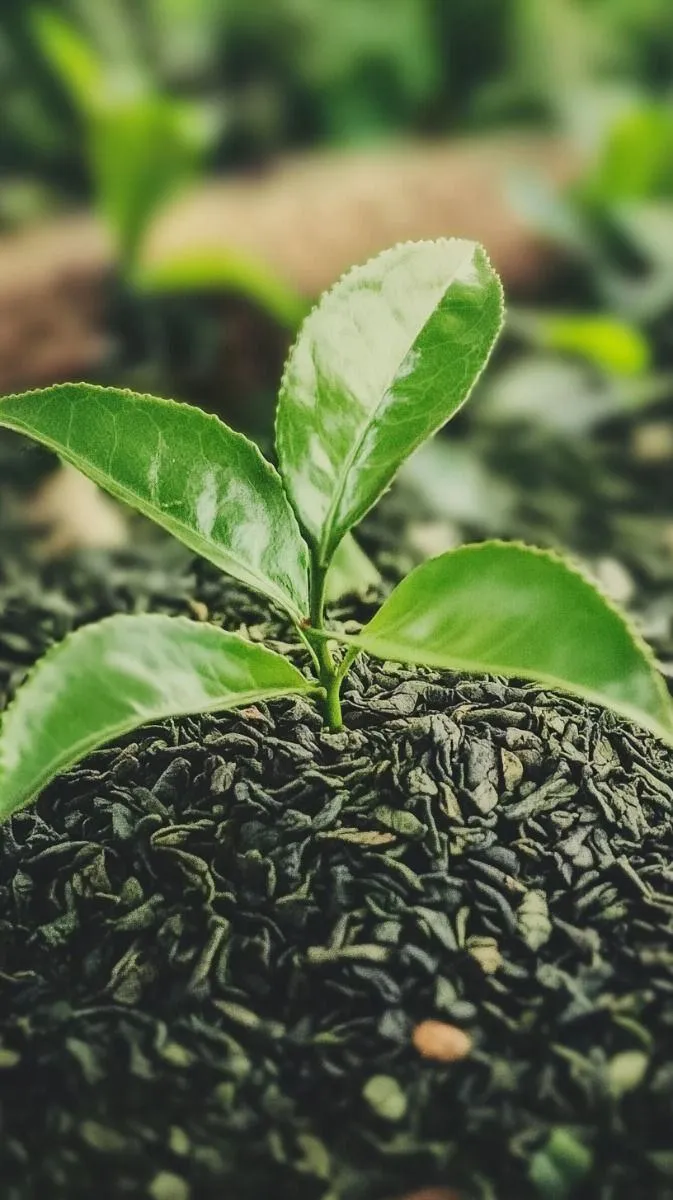
L-theanine is a unique amino acid found almost exclusively in the leaves of the tea plant, Camellia sinensis. First identified in green tea by Japanese scientists in 1949, this compound contributes significantly to the characteristic flavor profile of tea, imparting an umami taste often described as savory or brothy. Unlike most amino acids that serve as building blocks for proteins, L-theanine is not incorporated into human proteins but instead functions as a bioactive compound with distinct effects on the nervous system.
The chemical structure of L-theanine closely resembles that of glutamate, the primary excitatory neurotransmitter in the brain. This structural similarity allows L-theanine to interact with glutamate receptors and transporters, producing effects that are both calming and cognitively enhancing. The compound crosses the blood-brain barrier efficiently, reaching peak concentrations in the brain within 30 to 60 minutes of ingestion.
While tea leaves provide natural dietary exposure to L-theanine, the quantities consumed through typical tea drinking are relatively modest. A cup of green tea contains approximately 25 to 60 milligrams of L-theanine, depending on brewing time, water temperature, and tea quality. Supplemental forms allow for higher, standardized doses that produce more pronounced effects.
L-theanine has gained considerable recognition for its ability to promote relaxation without causing drowsiness or sedation. This unique profile distinguishes it from many other calming agents and makes it suitable for daytime use when mental alertness must be preserved.
Research published in the Asia Pacific Journal of Clinical Nutrition demonstrated that L-theanine supplementation increased alpha brain wave activity-the electrical pattern associated with a relaxed yet alert mental state often described as wakeful relaxation. Alpha waves are prominent during meditation and creative flow states, suggesting that L-theanine may facilitate similar mental conditions through natural neurochemical pathways.
The compound achieves these effects through multiple mechanisms:
For sleep support, L-theanine addresses one of the most common barriers to restful sleep: racing thoughts and mental hyperactivity. By promoting alpha wave activity and supporting GABAergic tone, it helps quiet mental chatter without the grogginess associated with conventional sleep aids. Studies have shown that L-theanine improves sleep quality metrics-including sleep efficiency and reduced nighttime awakenings even in individuals who do not report difficulty falling asleep.
The same mechanisms that make L-theanine valuable for sleep also support daytime stress management and cognitive performance. In situations of acute stress, L-theanine appears to attenuate cortisol responses, helping the body maintain physiological equilibrium under pressure.
A study published in Biological Psychology found that subjects taking L-theanine prior to a stressful task exhibited reduced cortisol and heart rate responses compared to placebo groups. This blunting of the stress response occurred without impairing cognitive performance, suggesting that L-theanine helps maintain composure without sacrificing mental acuity.
For cognitive function, L-theanine offers particular benefits when combined with caffeine, a pairing that occurs naturally in tea. Research has demonstrated that the combination of L-theanine and caffeine improves attention, task switching, and alertness more effectively than caffeine alone. L-theanine appears to smooth out the jittery edge that caffeine can produce, resulting in focused energy without anxiety.
Studies examining L-theanine’s effects on attention have found improvements in both speed and accuracy of information processing. The compound may also support working memory and executive function, making it relevant for tasks requiring sustained concentration and mental flexibility.
L-theanine’s influence on brain chemistry extends into several related areas:
Hearing and Auditory Health Emerging research suggests that L-theanine may support auditory processing and protect against noise-induced hearing concerns through its antioxidant effects on cochlear tissue and its modulation of glutamate excitotoxicity in the auditory pathway.
Cardiovascular Health By promoting relaxation and supporting healthy blood pressure responses to stress, L-theanine may contribute to cardiovascular wellness. Some studies indicate the compound supports healthy arterial function through its effects on endothelial nitric oxide production.
Immune Function Preliminary research suggests L-theanine may support immune responses by enhancing gamma-delta T cell activity, though this area requires further investigation.
L-theanine supplements typically provide doses ranging from 100 to 400 mg daily. The compound is well-absorbed orally, with bioavailability exceeding 95% in some studies. Effects on brain wave activity are typically detectable within 30 minutes and persist for several hours.
L-theanine is frequently formulated in combination with other calming ingredients such as GABA, Magnesium Glycinate, and Passionflower Extract. It is also popular in nootropic formulations paired with caffeine, Bacopa Monnieri, or Alpha GPC for cognitive enhancement. The versatility of L-theanine allows it to fit into formulations targeting sleep, stress, focus, or comprehensive brain health.
L-theanine has an excellent safety profile, with no significant adverse effects reported in clinical studies at typical supplemental doses. The compound is generally recognized as safe by regulatory authorities and has been consumed in tea for millennia without known toxicity.
Note: Because L-theanine may lower blood pressure, individuals with hypotension or those taking blood pressure medications should monitor their levels when beginning supplementation. The compound’s mild sedative properties suggest caution when combining with other central nervous system depressants. Pregnant and breastfeeding women should consult healthcare providers due to limited safety data in these populations.
Individuals exploring L-theanine may also consider the following complementary options:
| Ingredient | How It Complements L-Theanine |
|---|---|
| GABA | The primary inhibitory neurotransmitter that L-theanine helps support endogenously; direct supplementation offers a complementary pathway to calmness |
| Magnesium Glycinate | Provides essential mineral support for nervous system relaxation and GABA receptor function |
| Valerian Root | A traditional herbal sedative that may deepen sleep quality alongside L-theanine’s wakeful relaxation properties |
| Ashwagandha | Offers adaptogenic support for cortisol balance and mental clarity that complements L-theanine’s neurotransmitter modulation |
Explore more compounds for calm focus and mental clarity in our Ingredient Glossary.
Kimura, K., Ozeki, M., Juneja, L. R., & Ohira, H. (2007). L-Theanine reduces psychological and physiological stress responses. Biological Psychology, 74(1), 39–45. https://doi.org/10.1016/j.biopsycho.2006.06.006
Nobre, A. C., Rao, A., & Owen, G. N. (2008). L-theanine, a natural constituent in tea, and its effect on mental state. Asia Pacific Journal of Clinical Nutrition, 17(Suppl 1), 167–168. https://pubmed.ncbi.nlm.nih.gov/18296328/
Giesbrecht, T., Rycroft, J. A., Rowson, M. J., & De Bruin, E. A. (2010). The combination of L-theanine and caffeine improves cognitive performance and increases subjective alertness. Nutritional Neuroscience, 13(6), 283–290. https://doi.org/10.1179/147683010X12611460764840
Rao, T. P., Ozeki, M., & Juneja, L. R. (2015). In search of a safe natural sleep aid. Journal of the American College of Nutrition, 34(5), 436–447. https://doi.org/10.1080/07315724.2014.926153
Higdon, J. V., & Frei, B. (2003). Tea catechins and polyphenols: health effects, metabolism, and antioxidant functions. Critical Reviews in Food Science and Nutrition, 43(1), 89–143. https://doi.org/10.1080/10408690390826464
Owen, G. N., Parnell, H., De Bruin, E. A., & Rycroft, J. A. (2008). The combined effects of L-theanine and caffeine on cognitive performance and mood. Nutritional Neuroscience, 11(4), 193–198. https://doi.org/10.1179/147683008X301513